How to Start A Long Campaign
In this day and age, it may seem too difficult to get a campaign going. But there are ways to make it work, and it can really be worth the effort.

I posted this as a video a few days ago, and Lo! here it is in blog post form. So you can watch it or read it, which ever you prefer.
Have you ever seen one of those posts online where somebody’s talking about how excited they are because they just achieved their 50th session of a long-running campaign? And you think to yourself: how does an adult in 2026, with the fractured lives we lead and all the things vying for our attention, manage to get a group together and play for that extended period of time? How does that actually happen?
I’m here to tell you how it’s worked for me and my group — and maybe some of it will help you if you’re thinking about pulling together a long-running campaign.
What Is a Campaign?
A campaign, to me, is akin to a long-running dramatic series on HBO or Netflix — something like The Sopranos or Deadwood — where from one session to the next you’ve got the same core characters operating in the same setting, their stories are able to grow, they’re able to have many adventures, and if you do it right, it culminates in a very satisfying ending.
A short campaign for me is usually somewhere in the neighborhood of up to 15 sessions; anything beyond that I’d categorize as long. But everybody has their own definition. The point is that a long campaign really gives you the ability to dig into your characters, dig into the game world, and get truly immersed in it. Setting First is all about that feeling of engagement, that feeling of verisimilitude — of being really dialed into the setting. And the longer the campaign, the more opportunities you have to get there.
Rule One: The Right People
The most important thing when trying to pull together an extended campaign is the people who are going to be playing it. You’re going to be sitting around a table — or in a virtual environment — with these people session after session. Their characters might be interesting, the game world might be interesting, but if you don’t mesh with those people, if you can’t feel comfortable around them or enjoy their company, that’s going to be a problem. You need to be with people you’re going to enjoy playing with for a long time.
That’s why rule number one is: you need to have already played with these people. You need to know you’re going to get along, enjoy each other’s company, and be able to feed off each other creatively in that way that happens during the most fun, most exciting roleplaying.
Finding the Right People
For many people, finding a good gaming group is one of the most challenging things about the environment we’re all living in right now. There are of course, many ways to look: online tools, platforms like Reddit, and game-related communities for finding people to play with virtually.
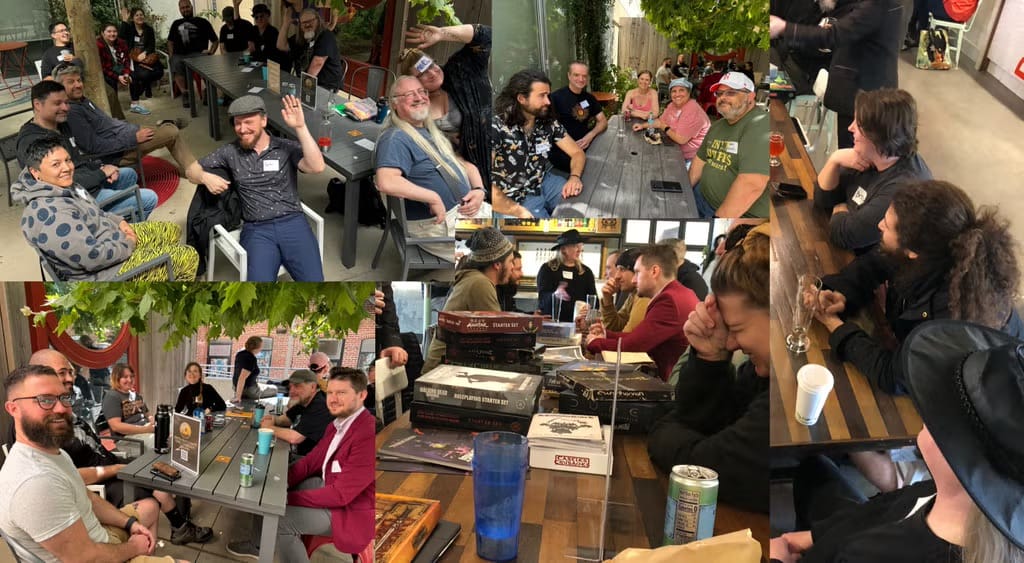
For me, in-person play is the pinnacle of the gaming experience. If you’re looking to meet people in person, something that might not be immediately obvious is that you can get together and socialize before you ever play a game. This makes for a low-risk, low-stress way of finding the right people.
Locally, about two and a half years ago, we set up exactly that. We call it the Gamer Gaggle. We hold it the second Saturday of every month. It’s just a way for tabletop RPG players to get together, meet, mingle, and chat. We pick a starter topic for each gathering, talk through it, and then conversation ripples out from there.
We’ve been doing it long enough that even though the same people don’t come every time, we get a great mix — usually anywhere from 15 to 25 people. Plenty of gaming groups have come out of it. It works because it’s a low-stress environment: you’re just meeting people, finding out what they like, which games they play, what kinds of stories interest them. And you get to assess them as people too.
Libraries are another underrated resource. Some libraries around the country host one-shot and pick-up games, and they can be a great place to meet potential gaming partners before committing to anything long-term. We’re currently running games at three different libraries in the county, which has been fantastic.

Once you find people you enjoy playing with — maybe through one-shots or two- or three-session games — don’t overstress the transition to a campaign. Just get one going, see if it’s gelling, and if it dies, you can build on that experience and try again. Don’t make it bigger than it needs to be.
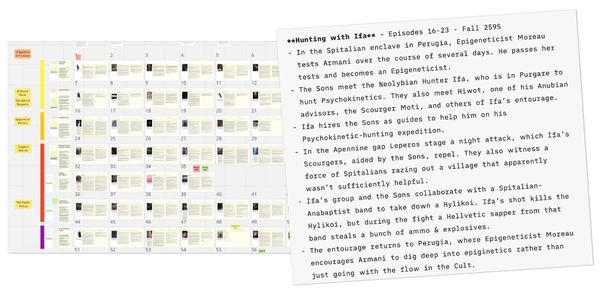
My core gaming group of three has been together for almost 20 years now. It started when I found them through Meetup.com — they needed someone to fill in for a player who’d moved away, and they were running Call of Cthulhu. I jumped in, we wrapped up the scenario they’d been playing, started another game, and over time played enough short and medium campaigns that we recognized we were going to work well together for the long haul. We’ve since played several campaigns of over 20 sessions, the longest of which is currently at around 92 sessions.
Rule Two: The Right Game
There’s a lot of debate in gaming circles about how much the rules matter. I’m not going to say that game mechanics dictate the quality of play, but some games are better suited to long-term campaign play than others.
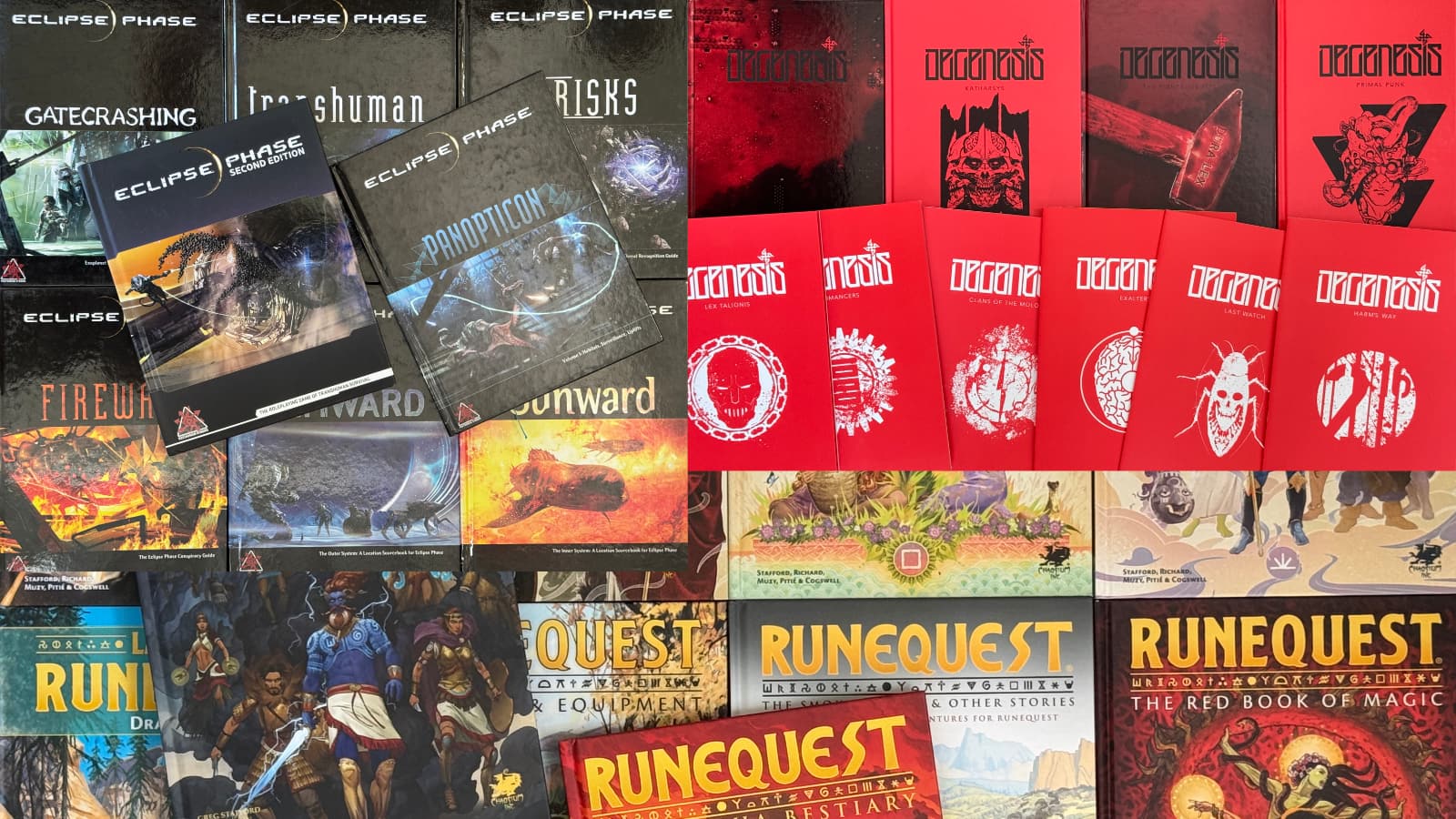
The way I think about it ties back to what I call foundational settings. I’ve made videos about three of them — Degenesis, Eclipse Phase, and RuneQuest — and the two main qualities that make a setting foundational are breadth and depth.
Breadth means you can do a wide variety of things in the game world. In Eclipse Phase, for example, you could run a crime campaign on Mars, a humanitarian mission to save transhumanity, a trading game out in the outer system, or a spy thriller against the Jovian government — and any one of those could sustain an extended campaign.
Depth means there’s substantial support for the things you want to do within that world. RuneQuest is a great example: if your campaign is set in Dragon Pass, there are adventures, sourcebooks, and setting material not just for the current edition but for previous editions, all of which can be used. You could run a 50-session campaign in Dragon Pass, start a fresh one in the same region, and the setting would still support you.
Mechanics That Don’t Get in the Way
As for the mechanics themselves, here’s a view that might seem a little contrarian: for a long campaign, what you want are mechanics that don’t bother anybody. Not necessarily the most novel or exciting mechanics, but mechanics that are workable for the setting and that allow players to deeply engage with their characters.
The Fantasy Flight Games Star Wars line is a good example of this — there’s a lot for players to do with their characters, and advancement keeps them engaged with the system for a long time. RuneQuest is similar: you’re constantly improving skills and making decisions about where to focus your development.
Outgunned is a fantastic game — we just finished what I’d call a short-to-medium campaign, just under 20 sessions, and it was a lot of fun. But it’s designed to emulate action movies, not to sustain years of campaign play, and it doesn’t pretend otherwise. The danger is getting caught up in excitement about the latest thing and not asking whether its mechanics will serve your purposes over the long term.
D100 mechanics, for instance, are generally well suited to long campaign play — assuming they suit your group. If they frustrate people, pick something else. The goal is mechanics everyone is comfortable with, that fade into the background and let the story breathe.
Rule Three: Commit to a Schedule
Even with the right people and the right game, campaigns die because life gets in the way. We live in a world full of distractions, full of things calling for our attention. Before the internet, the problem was scarcity of information. Now it’s the opposite — the technology industry has engineered an environment specifically designed to capture and hold our attention, because our attention is their revenue. It’s no surprise that carving out time for anything requires real effort.

So I want to be clear when I say this: making your campaign a priority doesn’t mean it’s more important than your kids, your relationships, or your responsibilities. It means treating it as a priority within your leisure time — and all of us have some measure of leisure time, even if it’s not much.
For our group, Friday night is the default. Game night starts at 7 pm. Does that mean we’re there every Friday? No. But there’s never any question about the timing or the schedule. It’s always Friday at 7 pm. When someone’s going to be out, we decide case by case whether to play without them or skip. What matters is that when something less important tries to crowd into that slot, we can say: I already have something planned. The decision has already been made. There’s less friction, less negotiation, less emotional overhead.
In practice, with 52 weeks in a year, we end up playing around 27 or 28 sessions — roughly half, but that’s actually a lot of gaming when each session runs three to four hours. And it’s far less stressful than constantly renegotiating when and whether to meet.
This only works if everyone in the group buys into it. People have to genuinely commit. And if circumstances change and someone can’t continue, that has to be okay — they can step out, and you can look for someone new. No guilt, no drama. That’s life.
There’s sometimes a feeling these days that every commitment should remain optional, that keeping your options open is always preferable. But a commitment to game night is a commitment to yourself — to your enjoyment, your creativity, and your social life. I work from home and I’m on video calls constantly. That is not socializing. Getting together with friends around a table on a Friday night is real engagement with real people. We all need that, and our group has gotten enormous value out of those Friday nights over the years.
The Three Things
To recap: finding the right people, finding the right setting and mechanics, and committing to a schedule. Those three things should get you in the door and give your campaign a fighting chance.
Ω
I’m genuinely curious about your experience — whether you’ve tried and struggled to get campaigns off the ground, or whether you’ve managed long-running ones. What’s worked? What’s been frustrating? Let me know in the Discord!