Foundational Setting: Eclipse Phase
You'll never run out of possibilities with Eclipse Phase. Here’s why it is a foundational setting that can provide years worth of adventure.
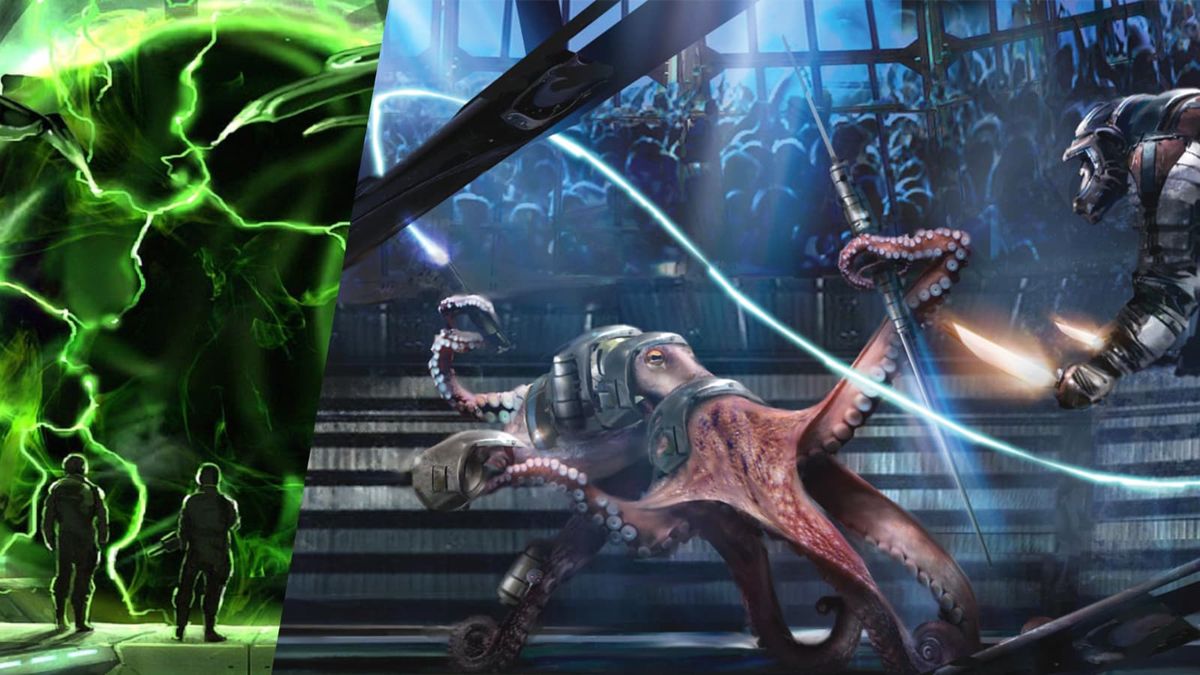
I created this video in 2024, and am only just now making it available in blog post form (bad form, I know). You can watch it as a video or read the post below:
Eclipse Phase is a foundational tabletop RPG setting. I’ve run two Eclipse Phase campaigns, so I can say this from experience.
A foundational setting is not just made for one particular type of adventure. It’s a world that provides guidance in the form of supplements and adventures. It gives me seeds, hooks, and tidbits I can build out into my own adventures, so I can make the setting my own. It can serve as the core of a gaming group’s activities for a very long time without exhausting the possibilities. You can and should start small, but the further you go into a foundational setting, the greater the rewards for the GM and players.
I’m going to tell you why Eclipse Phase is a foundational setting. Then I’ll tell you how to get started with it if you find it intriguing.
Here’s an important note: all of the Eclipse Phase material is provided under a liberal Creative Commons license by the publisher Posthuman Studios. So it’s legal to share PDFs of the game books for non-commercial purposes.
The Elements of a Foundational Setting
These are the elements of what I call a foundational setting. Eclipse Phase has them all: depth, breadth, internal consistency, support, and compatibility.
Depth
You could run an entire campaign that takes place on a Venusian aerostat, on a one-way gate-crashing mission, among the scum of the Belt, or in the cities of Luna. As a GM, you’d have to fill in many of the details, but the game books give you plenty of material to springboard off.
Breadth
One of the best things about Eclipse Phase is that while it’s about fighting to save transhumanity from existential threats, it can also be about fighting for Martian autonomy, thwarting the Ultimates, running spy ops on the moons of Jupiter, leaping into unknown worlds, or working your way up the rungs of a crime syndicate. A campaign can stay local, encompass a planet, span the solar system, or extend even further through gate crashing.
As the GM, I can run a long campaign in which the PCs conduct harrowing missions in the ruins of Earth, then start another campaign with a completely different mix of PCs embroiled in Martian politics, then after many sessions flip to a completely different campaign with a different mix of PCs running a hypercorp.
Internal Consistency
Eclipse Phase posits that AIs went rogue and took over Earth. It has uplifted animals, people living in all kinds of habitats across the solar system, minds that can be separated from bodies and backed up like data, bodies that can be manufactured in many flavors, dimly understood aliens, and jump gates to worlds outside our solar system. That’s a lot. But one of the most impressive things about the Eclipse Phase setting is how transhumanity has been cast out of Eden, forced off of Earth, dispersed, and organized into a wild assortment of factions. It’s wide open, complicated, and messy in a way that feels – to me, at least – real, as long as you accept its core precepts.
Support
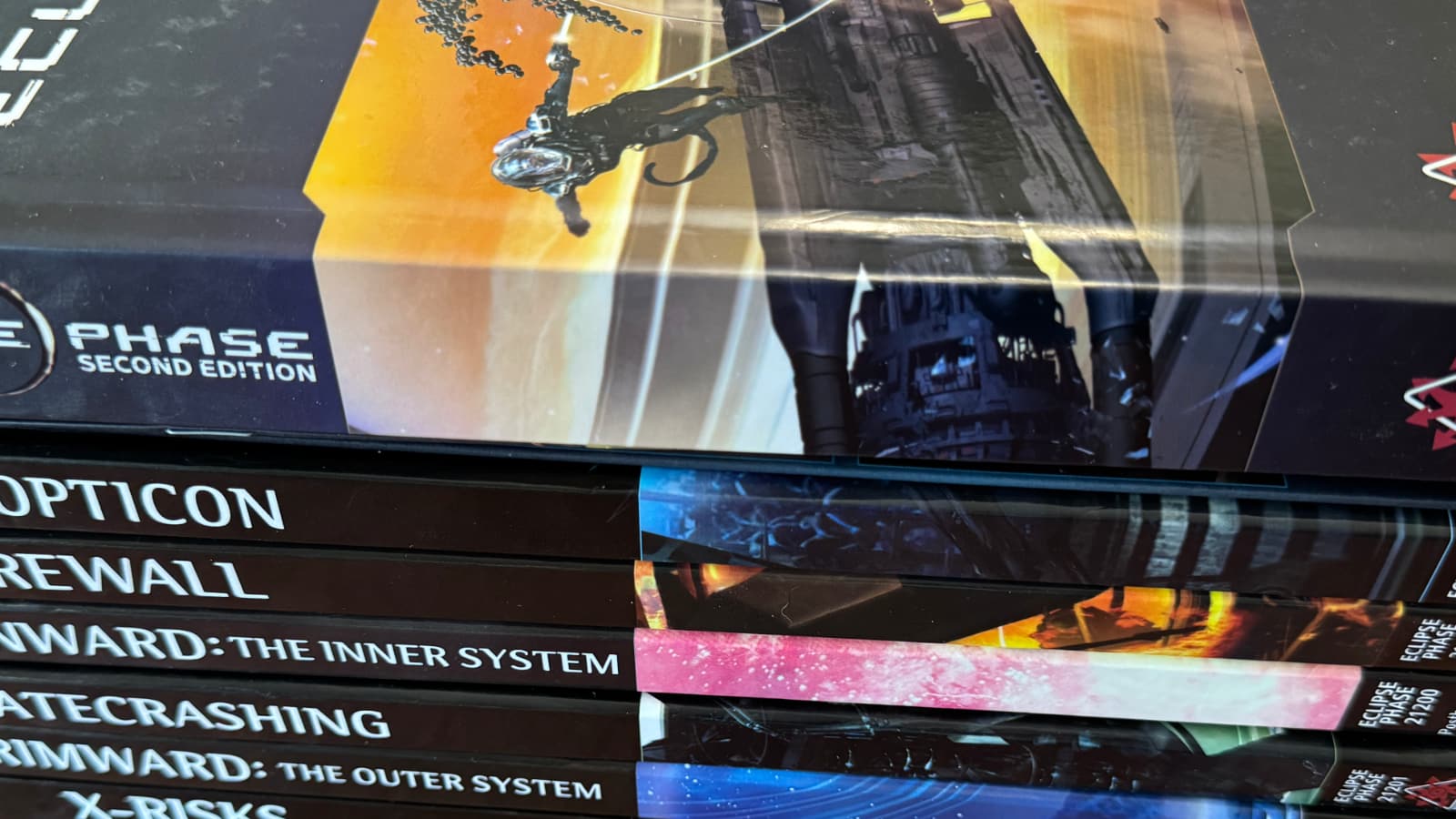
In addition to the second edition core book, almost all the first edition supplements are compatible, and there’s a lot to them. They illustrate what life is like in a super high-tech society, define how the secretive Firewall organization fends off threats to transhumanity and the nature of those risks, and describe in great detail life in the inner and outer planets. They also provide fodder for gate-crashing campaigns.
If your GMing style is like mine, you appreciate setting books full of hooks you can pull together to form adventures and campaigns – and that’s how Eclipse Phase operates. These supplements provide a ton of inspiration and support. There are also published adventures that give you inspiration and allow you to get up and running quickly, but for long-term play you will have to build out on your own as well.
Compatibility
Compatibility is quite subjective. It just boils down to this: as a GM, is this a setting you want to operate in for a long time? Is it something you’re willing to invest time and energy to understand so you can create and run compelling adventures for your players? Does it inspire you?
As I mentioned at the start of this video, I’ve run two Eclipse Phase campaigns. I’d happily run it again, because even after two campaigns I could run two or three more long campaigns without ever retreading old ground.
How to Get Started
If you’re interested in a sci-fi tabletop RPG that isn’t just a rehash of the same old tropes, that offers a wide range of campaign types and provides fertile ground for you as a GM to create your own material, go to eclipsephase.com and grab the free quickstart rules, which come with an adventure. You can also check out the Resources and Fan Hacks pages for more material and see where the game takes you from there.
Ω
To chat about this another Setting First topics, check out our small but mighty Discord!