Yes, You Can Limit Player Character Options
As a game master, it's OK to reduce player agency. It can lead to some amazing tabletop roleplaying experiences – you just have to do it the right way.
I published this as a YouTube video in November, 2025. Now it’s also available in blog post form. At Setting First, we’re all about providing options!
We talk a lot in this hobby about the importance of player and player character agency. But when the GM and the players trust each other, reducing player agency — and not allowing them to use the full range of their player characters’ abilities — can lead to some amazing gameplay. Let me explain what I mean.
What Do I Mean by Agency?
In this context, I mean agency of action: control over the actions of your character. This is distinct from the GM putting the PCs in peril. It’s about putting them in peril while constraining their ability to respond.
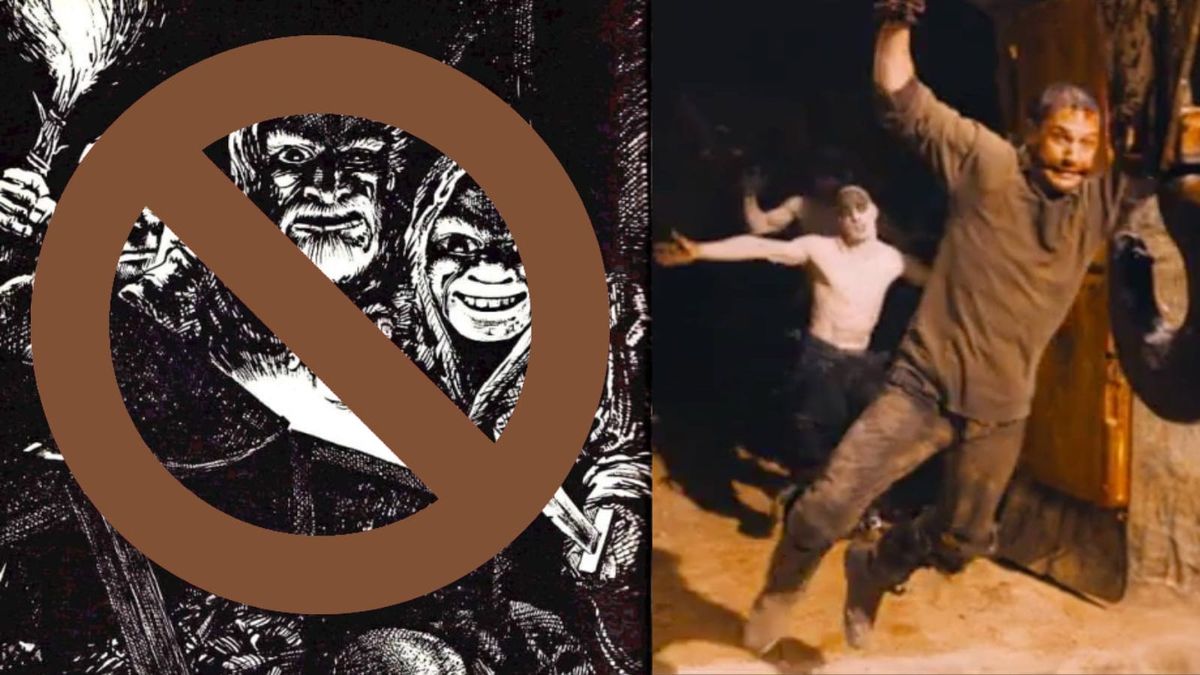
One example of this is a scenario in which the player characters start an adventure as captives of a horde of wasteland warriors. The PCs didn’t make any mistakes. They didn’t do anything wrong, but now their vehicle is gone, their weapons are gone, and their options are radically limited. They must act.
This isn’t an opportunity. It’s not optional or volitional. They aren’t delving into the ruins of the necromancer’s castle for fame and treasure. This isn’t an expedition. They don’t get to plan ahead of time. They don’t get to weigh the risks or do anything to stack the odds in their favor. The adventure is upon them whether they want it or not.
But hey, life is unfair. As much as we’d like to impose our will on the world, usually it’s the world that’s imposing itself on us. What matters is how we react to those impositions. And this applies to many of the most compelling characters in adventure fiction. In Fury Road, for example, Max wasn’t looking to help anyone, much less help them take down Immortan Joe. He just got hunted down and turned into a blood bag. From there, he had to make a series of decisions about how he’d escape and what he was or was not willing to do in order to get out of danger. What started as pure survival became an epic physical and emotional journey.
Trust Is Vital
Bringing this back to tabletop roleplaying: you can narrow player agency and in so doing plant the seeds of awesome adventures. But if your players think you’re limiting their agency arbitrarily and giving them only a single narrow path to survival, they’ll just pack up their dice and tell you where to go. And rightly so — because while that sort of setup may make you feel clever as a GM, it’s really more about your ego than it is about cultivating vivid drama.
Trust is vital when you’re reducing player agency. And if you haven’t already built up that trust over many game sessions — and maybe even then — you’ll need to be explicit with them to assuage their fears and help them into the right headspace. Ideally, you want to do this at the start of the campaign when you’re all confirming what everyone wants and doesn’t want.
Setting Expectations Up Front
First, tell them there will be no arbitrary PC deaths. Nobody’s going to die from a Warboy deciding to just kill a helpless captive. Could a PC die from doing something stupid? Absolutely. But the point of limiting player agency is not to kill off PCs — it’s to heighten dramatic tension.
Second, reassure the players that there are ways — more than one — for them to regain agency of action. Is the situation dire? Yes. Could their PC suffer? Could they die? Yes. Are there means of getting out of that immediate danger? Yes. But the players will have to be resourceful.
Third, make sure they understand that creativity will be rewarded. Sometimes that’s a clever plan. Sometimes it’s an inspired plea to an NPC. They should know that the point of constraining their options and squeezing their characters hard is to foster creativity.
Yes, it may sound a bit weird, but talking about it upfront in this way can help players get invested in what they’re doing. They’ll be on edge. They’ll be working hard to get their characters out of danger, but they won’t be thinking you’re out to get them, and they won’t be thinking the situation is completely hopeless.
As a good GM, you’re a fan of the players and their characters. You want them to succeed, but you also want them to go through the wringer. You want their limits to be pushed. You want the players to feel off balance and uncertain of what comes next.
Because when they do come up with creative approaches, when they do find a way to squirm out of the vice you’ve put them in, they’ll feel that rush of satisfaction that comes from cheating death. It’s a subtly different emotion from the feeling they get when their characters successfully sneak into the treasure room. It’s a bit more visceral, a bit more intense.
Keep the Information Flowing
As a GM, it’s vitally important to continuously feed the players information. Constraining their agency of action doesn’t mean removing it completely — they still have autonomy of thought. They can think for themselves, and tabletop roleplaying is nothing if not a thinking game.
When I was coming up in the hobby, there was this idea that as a player, you had to ask exactly the right questions in order to get useful information — as if your characters were utterly oblivious to their surroundings, except for these random moments when they had penetrating flashes of narrow insight. This approach is tedious. It slows the game down as everything becomes a back-and-forth on minutiae between the players and the GM.
Player: “Do I smell anything weird?”
GM: “Oh, you finally asked. Actually, it reeks of gasoline in this chamber.”
No. Scrap that. Tell the characters about the bonds they’re bound by. Tell them they can feel a slight breeze coming through the passageway. Tell them they can dimly hear the sounds of a welding torch in the next chamber over.
The more information you give them, the more creativity they can exercise, and the more options — however narrow — they’ll discover. Players, being players, will surprise you. They’re generally quite good at finding a wisp of opportunity and turning it into something more tangible.
Don’t try to come up with a finite list of which options will work for the PCs and which ones won’t. That will limit your ability to riff off player creativity. Instead, know the environment the PCs are in. Know the motivations and capabilities of their opponents. Continuously pump out information and allow yourself to be surprised.
A Powerful Tool, Used Wisely
Reducing player agency is just one tool in your GM tool belt. If you overuse it, it’ll start to feel formulaic to players and to you as well. But if you operate within a framework of trust, it can also lead to some amazing sessions.
Ω
If you’d like to talk about this or related topics in more detail, please join us at the small but mighty Setting First Discord.