Tabletop Roleplaying Kicks Ass
Tabletop roleplaying occupies a unique and valuable spot in a culture that is increasingly bland and predictable.
I posted this as a video at the end of 2025, and now you can either read or watch it, as your preference dictates.
This one is a bit different from my usual. It’s a celebration, really. The end of the year is a time when I take stock of what I’m thankful for, what amazes and inspires me. And I’m here to tell you — though I’m sure you already know this — that tabletop roleplaying kicks ass.
Pretty much everything in America has been moving in a winner-take-all direction for the last four decades or so. Everything is about network effects and economies of scale. This extends to cultural production: movies, fashion, music, architecture. Even scientific research has succumbed to the great averaging out. All kinds of amazing stuff is being produced, but only a sliver of it gets noticed — and not always the best sliver.
But you, you wacky tabletop roleplayer, you are part of a subversive phenomenon that cuts against that grain. Tabletop roleplaying is this oddball activity driven by wildly divergent artistic and functional goals, by experimentation, by cross-pollination, and by this hard-to-describe melding of creator and consumer. It’s a barely discernible blip in economic terms, but it punches way, way above its weight in cultural impact. And now more than ever we need the kind of creativity it engenders.
The Great Averaging Out
What do I mean by the great averaging out?
Look at what was the dominant art form of the 20th century: movies. Franchises now dominate. Since 2007, Marvel has released 37 MCU movies with eight more in development — that’s a lot of sequels, crossovers, and in general, people running around in tights.
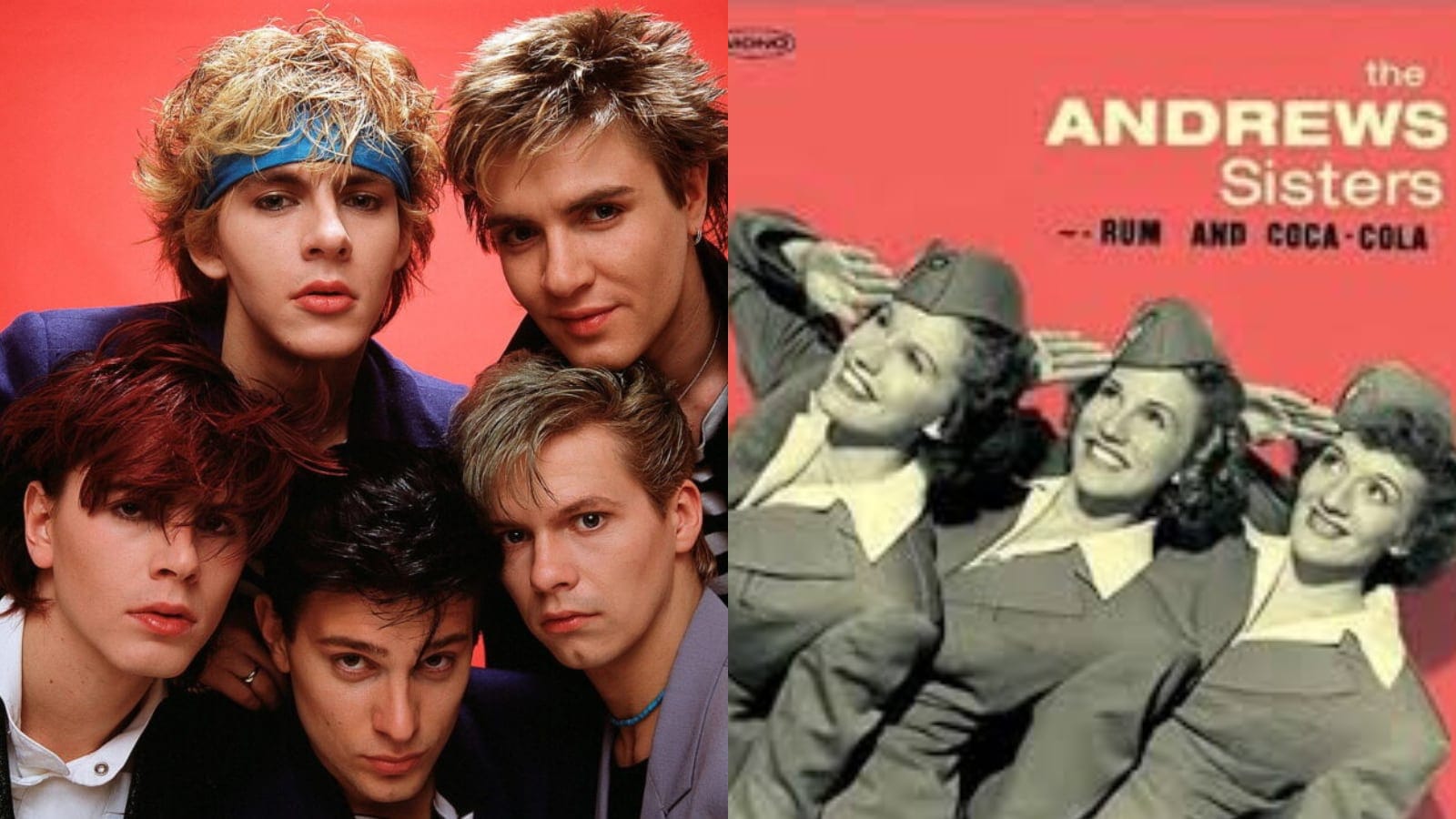
Music lyrics are getting more repetitive. The music itself is more homogeneous, and young people are listening to a lot of music produced in the ‘60s, ‘70s, ‘80s, and ‘90s — possibly because music from those eras isn’t as blandly predictable as much of what is produced now. And I get it. There’s a lot of great ‘80s music. I was a teenager in the ‘80s, and as Chris Rock has noted, there’s usually a lot of love for the music you were listening to when you first got laid. But in 2025, listening to “The Wild Boys” by Duran Duran is like being in 1985 and listening to music produced in 1945. “Rum and Coca-Cola” by the Andrews Sisters, anyone? That’s just kind of sad.
There hasn’t been anything new and exciting in clothing since the invention of the modern yoga pant in 1998. Architecture is stagnant because nobody wants to take a chance on something that might put people off. Even scientific research is suffering because attention is as much a currency there as anywhere else.
The engines of cultural production are playing it safe, and the result is mostly bland and boring. Even the best TV shows are notable primarily because they stand out so clearly from most of the dreck being produced every year. A lot of this has to do with dialogue — streaming execs have realized that because casual viewers are only half paying attention to whatever show they’re watching, characters should announce what they’re doing before they do it. I’m not making this up.
Tabletop RPGs Are Different
Tabletop RPGs don’t suffer from this stagnation. They don’t treat their audience like dummies. New game designers and players are constantly jumping in to put their stamp on the hobby. Every year there are new games that explore wildly inventive settings, conjure up clever new mechanics, and invite us to take part in sessions that really do feel different from what has come before.
Tabletop RPGs are still full of wildly inventive material, in part because — other than D&D, which is at this point essentially a separate thing that happens to overlap with tabletop roleplaying — none of them can scale up to the point where they’re actually required to play it safe. Being a niche activity where true scale is impossible allows all kinds of creativity to bubble up.
Tabletop RPGs have actual creative movements – OSR, indie story games, and so on – and mutations all over the place. Powered by the Apocalypse, for example, spawned offshoots that became their own game engines. The fact that patents have been interpreted not to apply to game mechanics is a big part of this, along with the relatively low cost involved in creating a tabletop RPG.
Tabletop roleplaying is a hobby first and foremost, and — again leaving D&D aside as essentially its own thing — only secondarily a market. Corporations can’t screw up tabletop RPGs because, other than Hasbro, they don’t want to bother with them. The market is too small in revenue terms and too fractured. It’s just impossible to scale in the way that a publicly traded company requires. Everything corporations can make money doing at scale, they’ll take over. That’s not to say this is bad or good — it just is, the way kudzu is neither bad nor good, or fungus is neither bad nor good. It does what it’s programmed to do. But tabletop roleplaying games don’t make enough money for corporations to get involved.
There’s just this vast, distributed marketplace of one-person indie creators and very small teams. Even the biggest tabletop RPG companies are absurdly small in headcount and revenue compared to, say, whatever your town’s biggest physical retail store is.
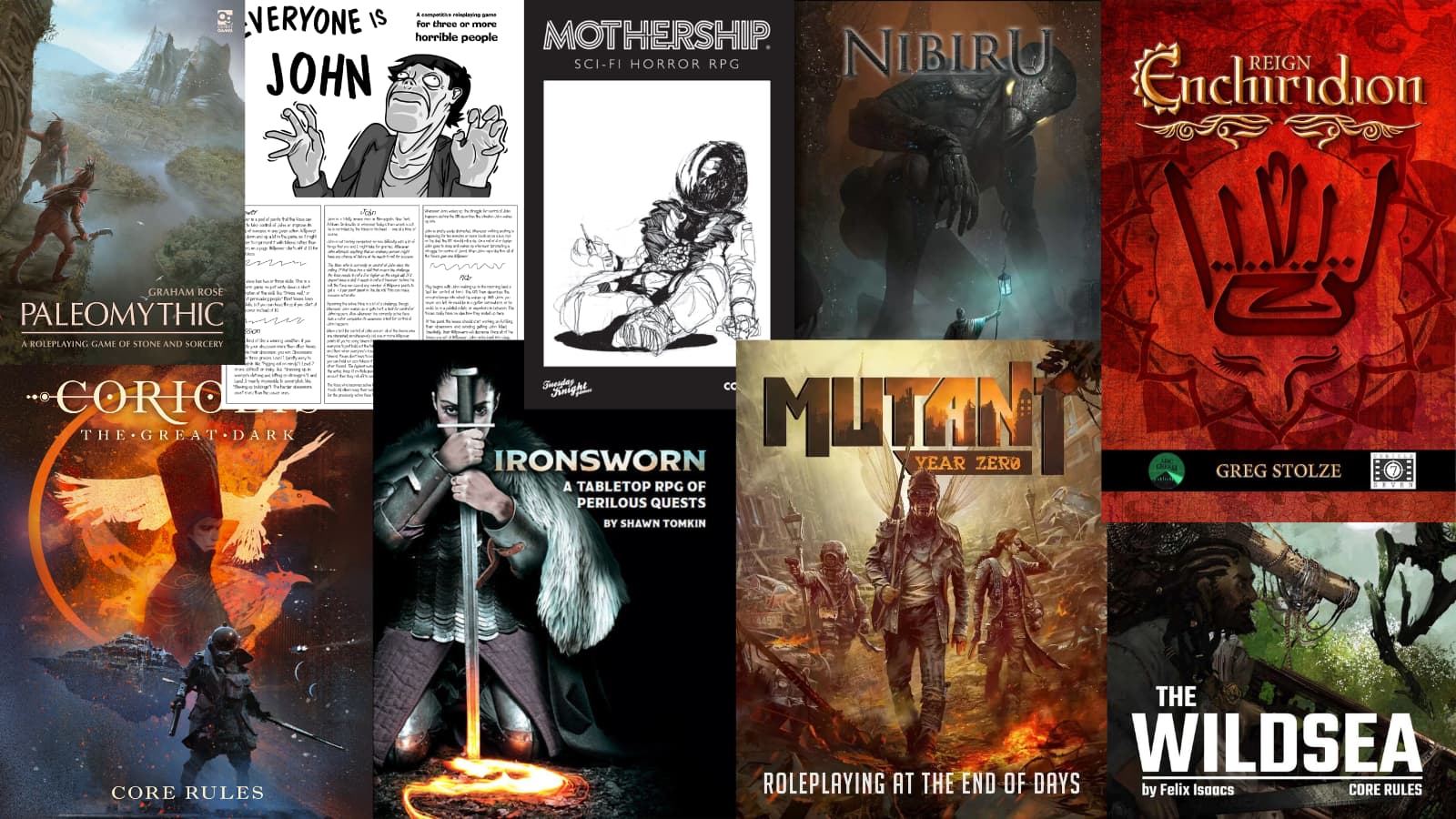
Yes, there are new editions of old games, but that’s not stopping wholly new games from becoming quite popular. There are families of game engines, but they’re constantly shifting in popularity. Fate gave way to Powered by the Apocalypse. The Year Zero Engine is getting quite popular. And whatever the new hotness is, the old games never really go away.
Imagination Is the Key Ingredient
Tabletop RPGs provide a broader range of stories and experiences than any other popular medium — more than video games, more than movies, perhaps more than even written fiction. Our hobby encompasses everything from solo games to collaborative games about being elements within a person’s mind, to finding out who characters are by discovering memories, to running an empire, to surviving vicious combat against deadly mutants.
The medium lends itself to creativity because playing the game is essentially a shared hallucination. You can make a tabletop RPG about almost anything because imagination is the key ingredient. The rulebooks can be beautiful artifacts, but they’re only there to provide a lattice for the imagination. Our imaginations feed the events that grow, like ivy, around and through that lattice.
In tabletop roleplaying, there’s no dependency on graphics cards or specific operating systems or on a big public company that controls the hardware your game plays on.
If you really think about it, tabletop roleplaying is wildly subversive. Every day, around the world, thousands and thousands of people are getting together with friends and creating their own stories. Even the stories created in licensed games are their own creations. It’s the antithesis of passive consumption. It’s human-moderated, human-controlled, human-created.
Here’s to more tabletop roleplaying for you and your friends in 2026.
Ω
Come chat about this and other tabletop RPG topics in our small but mighty Discord!