Worldbuilding Through Dialogue
In making a tabletop RPG setting come to life, how characters talk isn’t discussed all that much. So let’s discuss it.
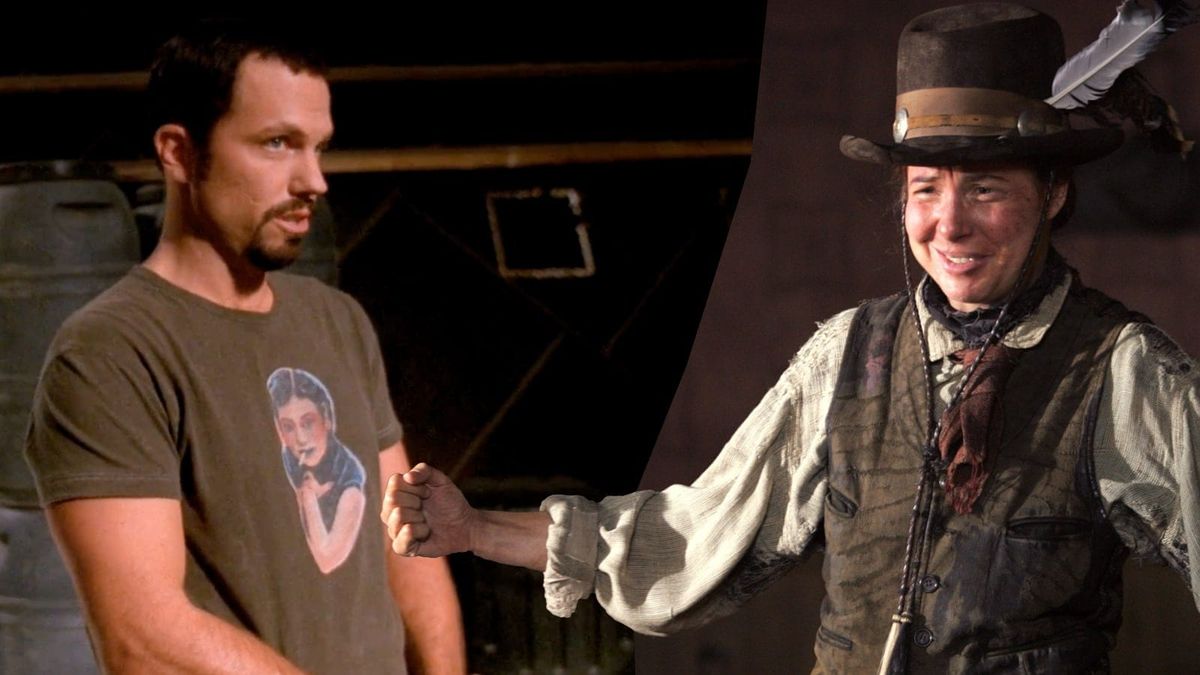
In my ongoing effort to bring the blog and the YouTube channel to parity, here’s the written version of a video I posted in February of 2025. Now you can watch it or read it.
Recently I rewatched the Firefly series—because, well, why not. One of the most delightful things about Firefly and Serenity is the economy with which they transport viewers to a distinctive imagined future. The backstory is minimal, there are no elaborate factional conflicts, the ships and sets aren’t terribly unique, and most of the planets look like Bronson Canyon. So how is it that the setting feels so alive?
I think dialogue is the secret ingredient.
First, occasionally a character will say something in Chinese. We don’t even need to know what it means—and it’s probably better that we don’t—to recognize that this is a different future. A little goes a long way. Second, every once in a while you hear something in the dialogue that makes sense but requires a half-second to parse. It’s all of a kind: specific words put together in a way that evokes the spirit of the Wild West, that lawlessness, that frontier feeling. Whether people actually spoke that way in Nevada City in 1881 is beside the point. The Wild West is ingrained in our collective memory; its echoes are everywhere in global pop culture. So when we hear Mal declare “I aim to misbehave” or Shepherd Book “reckons” something, that’s all our brains need to conjure up all sorts of associations with the Wild West.
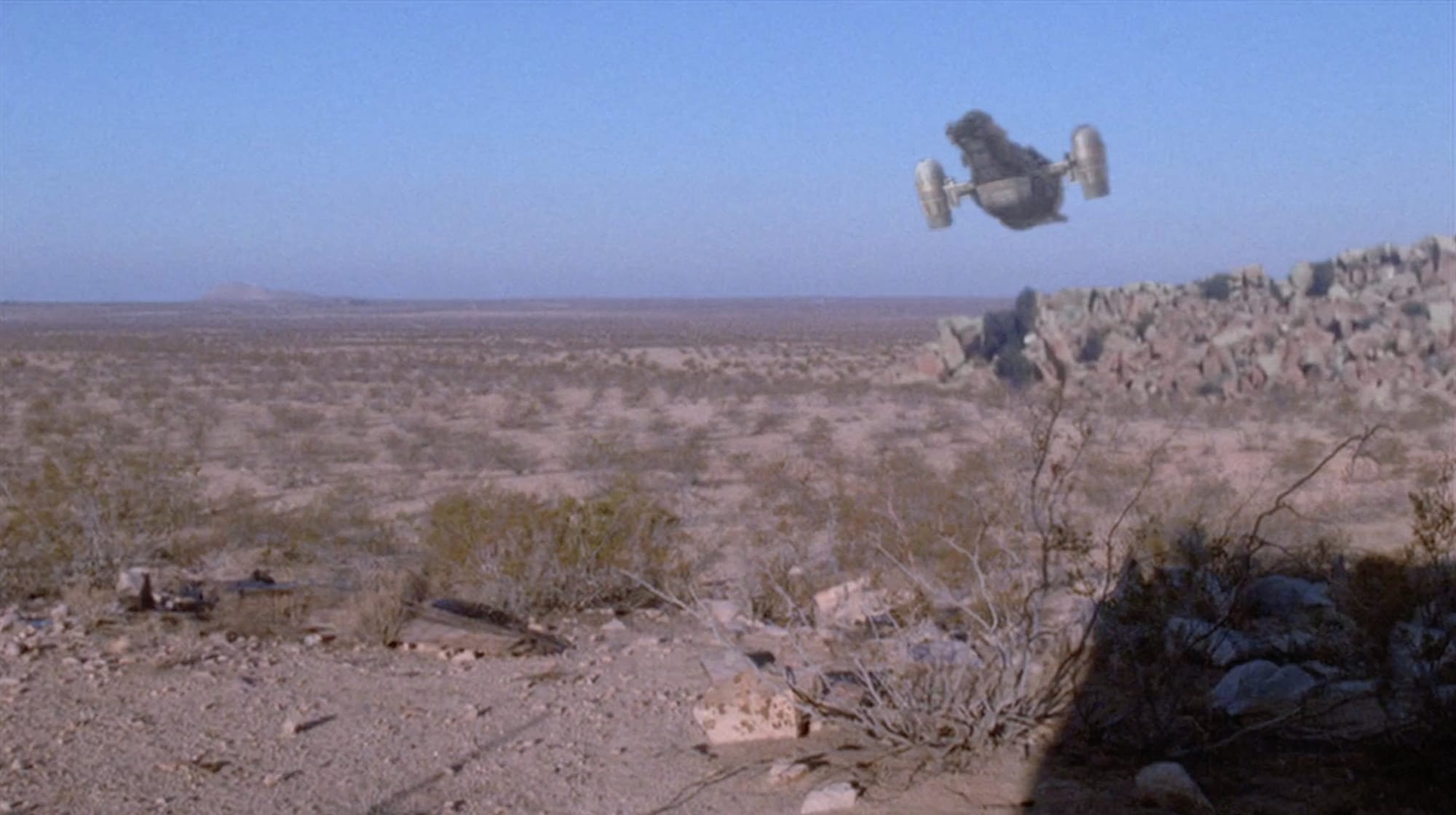
This evocation of the Wild West serves another purpose as well: it separates the denizens of the scruffy outer planets from the citizens of the sanitized Alliance. So in the Firefly universe, how people speak is as important as the words they’re saying.
This recognition got me thinking about other works I admire that similarly leverage dialogue—particularly in the context of making a tabletop RPG setting come alive.
Riddley Walker
The first work I want to look at is the book Riddley Walker. This is a book that takes effort to read. It doesn’t require Name of the Rose historic-references-in-three-languages level effort—just basic parsing of the text. But working your way through the words is like encountering a thick regional accent; after a time you pick up on its rhythms and come to understand what’s being said.
First published in 1980, Riddley Walker is written from the perspective of its titular protagonist, a boy living in what might be called a scrap-iron age in inland England two millennia after a devastating nuclear war. Everything about the setting and its inhabitants is different from what we as readers know, so the author Russell Hoban didn’t just adjust a few words here and there—he changed the spelling of familiar words and applied a particular cadence to the narrator’s delivery:
Still it takes you strange walking in your old footsteps like that putting your grown-up foot where your child foot run nor didn’t know nothing what were coming.
I tried to plot the parbilities of that and program what to do next.
That reconstruction of language, combined with the details of a society alien to our own, makes reading Riddley Walker a uniquely immersive experience. But because the book relies so much on the spelling of words and a full lexicon of terms highly bound to history and terrain, there isn’t much of direct practical value that we as role-players can apply from its use of language.
I still heartily recommend Riddley Walker for its own sake and as an example of how powerfully dialogue can shape a fictional world.
Crossed + 100
The Crossed + 100 comics are post-apocalypse tales of a far different stripe. They portray a fledgling civilization rebuilding in Tennessee a century after an infected outbreak almost wiped out humanity. These Infected are a manifestation of humanity’s worst impulses—they engage in depraved want and violence and make the walkers of The Walking Dead seem relatively benign by comparison.
As you might expect, enduring that kind of collective trauma marks survivors’ culture. How can foul language be considered offensive in a world that has gone completely off the rails? Famed writer Alan Moore exposes this through dialogue. For example, a famously multipurpose term has, 100 years after the zombie apocalypse, lost any shock value and is used simply for emphasis.
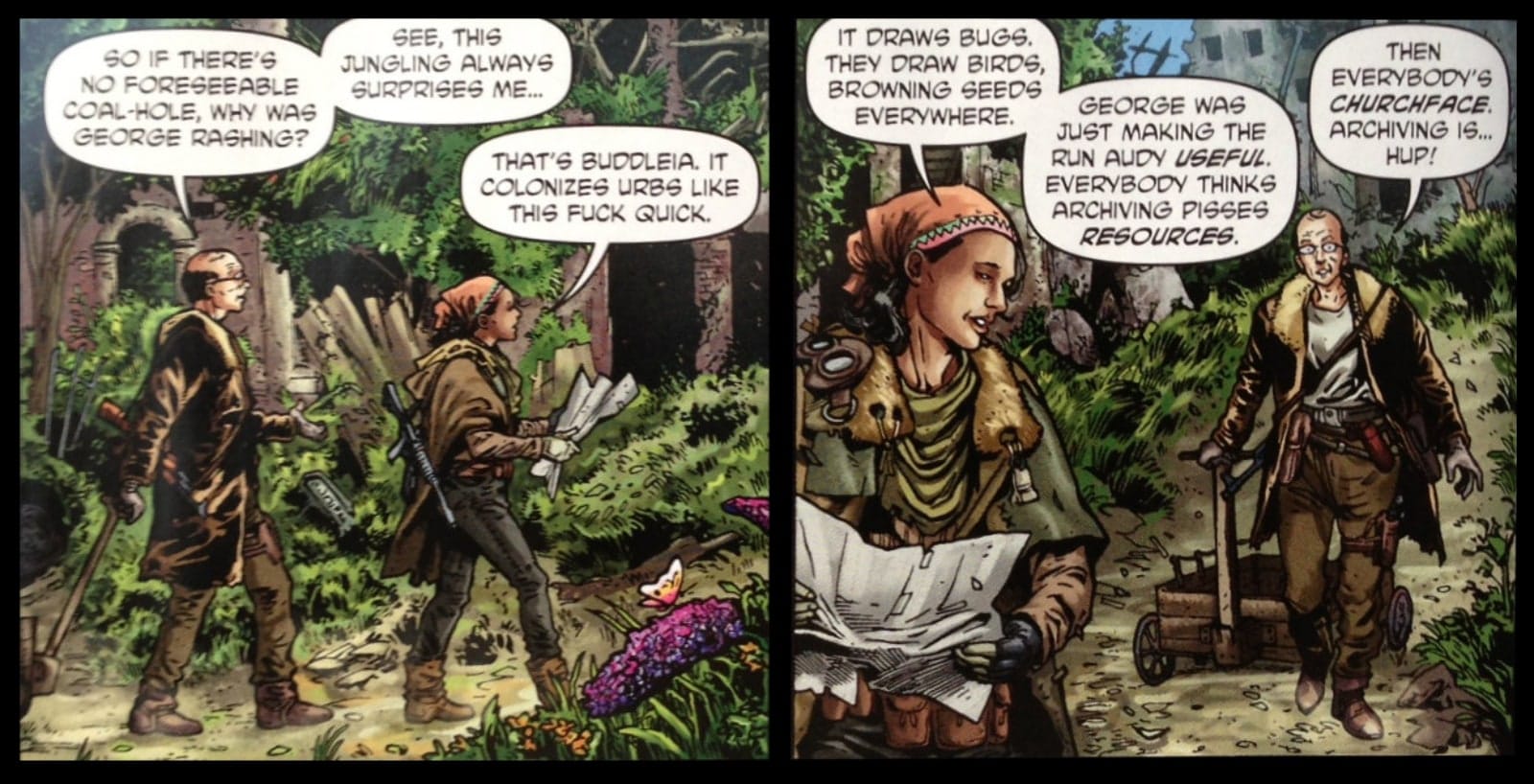
Unlike the Firefly/Serenity approach, the language of Crossed + 100 evokes a specific history that is the very story being told. This story connects the past and the present—that which became what came before “the Surprise,” and that which came after it. So the words they use keep reminding us of those connections. In Firefly and Serenity, the use of archaic language is there for thematic purposes rather than to explicitly support the story.
There’s a lot about the power of dialogue to be learned from Crossed + 100, but it’s also a lot more involved than what you find in the Firefly universe. While a cheat sheet would do to keep track of linguistic differences in Firefly, more effort would be required to make sense of Crossed + 100—and critically, more effort would be required at the game table. Even the most ardent method actor would have to put a lot into it. So as with Riddley Walker, I enjoy the Crossed + 100 comics both as artistic works on their own merits and as inspiring world-building examples, but I wouldn’t attempt to embrace that level of linguistic drift in a role-playing campaign.
Deadwood
Deadwood, written primarily by David Milch, uses dialogue informed by the rough-and-tumble days of the 1870s. If you’re offended by dirty language, you’ll bounce right off Deadwood. But what fascinates me most about the show’s dialogue is how it combines vulgarity with wit.
The denizens of Deadwood are not society’s winners. These are not well-heeled, highbrow East Coast landowners. They’re almost all taking a shot at success in this lawless frontier town because they feel they have no other options. They speak the language of people accustomed to bad breaks, tough choices, and bitter disappointment—and they do it with a sort of eloquence that’s almost impossible to emulate.
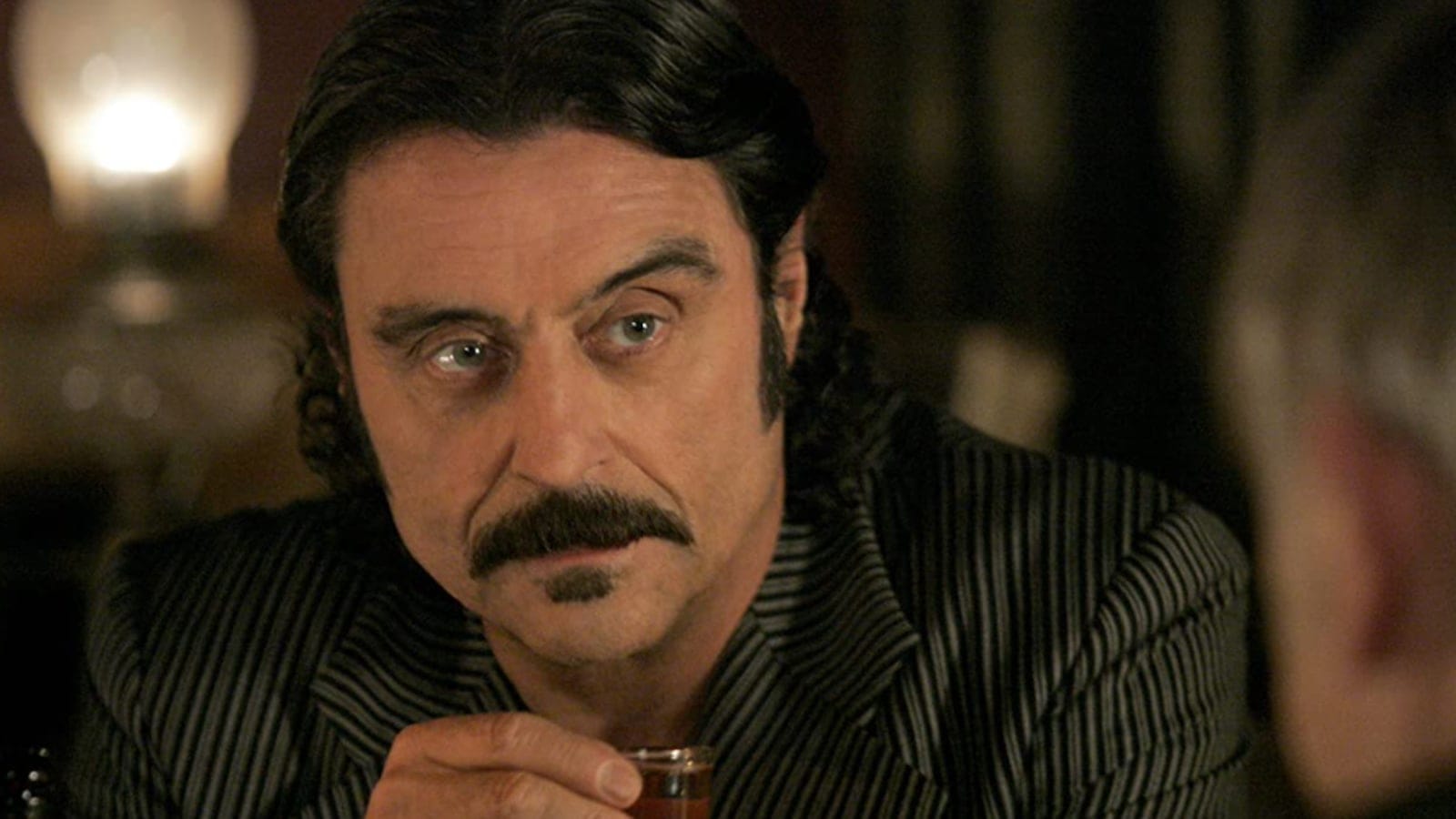
Deadwood is a dangerous place, a pit of conflict, but none of its inhabitants are two-dimensional and a vein of dark humor flows throughout. Consider this exchange between Swearengen, the town’s unelected boss, and Dan Dority, his chief henchman:
S: We forgo the rock for the dagger. Learn distraction’s use and deception’s before the dagger’s employed. Spirits, women, games of chance.
D: I’m older and I’m much less friendly to change.
S: Change ain’t looking for friends. Change calls the tune we dance to.
Again we find ourselves looking at a work of art that stands out for many reasons, among them its ability to build a world with words. And again, it’s a bit much to emulate in a role-playing campaign, either for GMs or players.
A Personal Confession
Now, this is the moment in this little tour when I fess up: I have left dialogue untended for quite a long time in my gaming. It’s not that I haven’t used it—it’s just that I haven’t engaged with it as much as I’d like, probably since the early 1990s.
At that time, my original gaming group and I were converting our long-running in-person Shadowrun campaign to a play-by-post format, in which I as the GM would write the player characters into difficult situations, the players would write their characters most of the way out, and I’d wrap it all up in a conclusion. As part of that conversion, I collected slang from the multitude of Shadowrun supplements I owned and made a slang sheet—well, sheets—to help us write better dialogue. It was a multi-page affair that took several hours to complete, but it proved quite useful as a writing aid.
Eventually that play-by-post campaign ended. Real life got in the way, and for a few years my only interaction with tabletop RPGs was reading rulebooks and pining for the good old days. When I got back into gaming it was at first infrequent; the full immersion of the Shadowrun days was a thing of the past. Later I found a new gaming group, discovered lots of new games, started learning new tricks, and built deep campaigns—but I never put as much thought into the day-to-day speech patterns of the characters I ran, whether as an NPC or occasionally as a player.
Now that it’s on my mind, I feel like I need to bring it in with more force.
Takeaways
My biggest takeaway from this journey through dialogue in other works is that it can be a powerful tool in establishing setting and evoking themes. Inspiration is all around us: Valley Girl, Lock, Stock and Two Smoking Barrels, Clueless, Idiocracy—there are many more examples that provide similar lessons.
As a practical matter, though, the Shadowrun cheat sheet I created would place an undue burden on actual in-the-moment role-playing. A handful of terms, a few undefined references here and there—think about Roy Batty’s soliloquy at the end of Blade Runner—are really enough to transport us from the table to an alternate world without turning game night into a language immersion class.
It seems that the Firefly/Serenity approach is, in most cases, just about right. It’s not about pulling you into the Wild West—it’s about using a few words here and there to pull you out of your normal day-to-day and into the campaign world.
So now, if you’ll excuse me, I have a brief slang sheet to write for my Degenesis campaign.
Ω
Want to talk about this post or other Setting First topics? Check out our small but mighty Discord.