Gen Con 2026
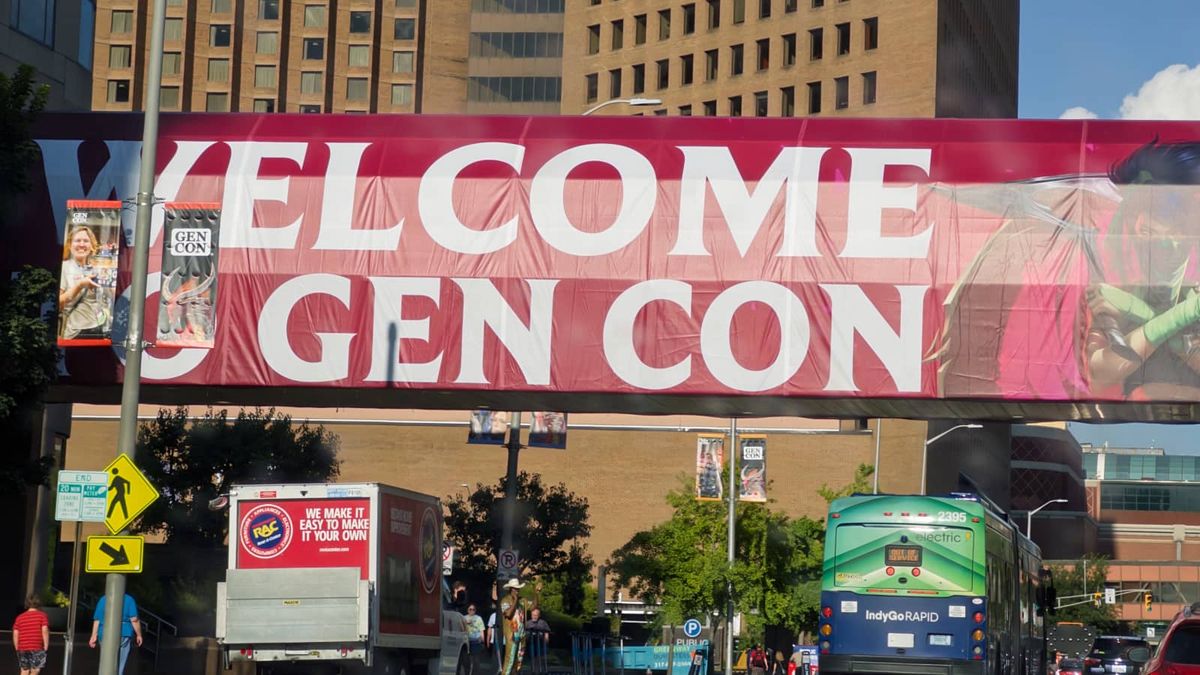
Attending Gen Con for the first time was fun and in some ways surprising.
45 Years
I’ve been curious about Gen Con since I first got into tabletop roleplaying, roughly 45 years ago. It’s crazy to think about that. Four and a half decades. That’s a long time to be doing anything. It’s also a long time to be thinking about doing something, wondering about doing it, but not actually doing it.
As a teenager in the 1980s, Gen Con occupied that spot in my mind reserved for things I knew to be real, but that were also slightly outside the bounds of comprehension. I mean, a gathering of hundreds of people who got together just to play wargames and fantasy roleplaying games? What an amazing thought!
Of course, by the time I got around to attending, Gen Con had become so big that the city of Indianapolis estimated it generated $82M of economic activity over four days. 74,000 hungry, thirsty, transportation- and lodging-needing gamers will do that.
I can’t help but think about Gen Con as a reflection of tabletop gaming as a whole. The wargamers and fantasy roleplayers of the early days of Gen Con were just oddballs taking over horticultual halls, American Legion halls, and small colleges. By the 1980s Gen Con was attracting thousands of attendees every year, but roleplaying in particular was seen as weird at best, and demonic at worst.
Now here I was playing a game of Lex Arcana on the field where the Indianapolis Colts play their home games. Thousands of nerds taking over an NFL stadium with the blessing of the city’s leaders and the rabid encouragement of countless Indianapolis businesses is about as powerful a symbol of cultural and economic acceptance of tabletop roleplaying games as you can get.
GMs and Players
He may read this, so I don’t want to come across as obsequious, but I really enjoyed playing Blue Planet: Recontact, as run by Jeff Barber, the game’s creator. Blue Planet is absolutely a Setting First game. I signed up for it on the basis of Runeslinger’s enthusiasm for the game, and because the entire concept of the game world sounded well thought out and truly unique.
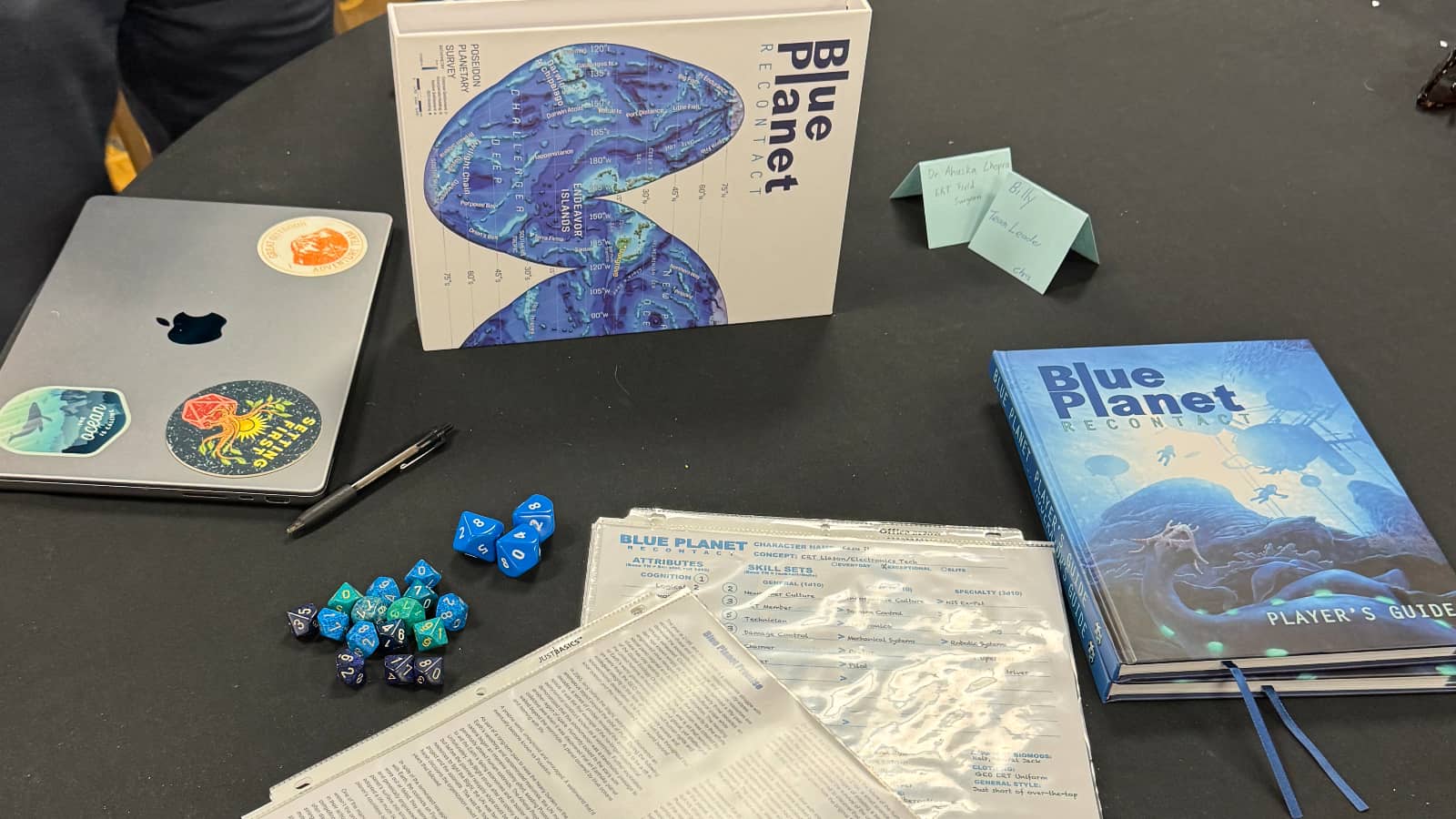
Not only did Barber know the world inside and out, he was skilled at quickly making it feel real to the players, and pulling us into the mental space of inhabitants of that world. We had a good player group — everyone was invested, paying attention, and thinking creatively. And he kept things moving without making it feel like we were on a railroad. It was great.
I also really enjoyed most of the other games I played. I took notes on techniques they used, and identified some areas where my GMing could be improved through a few tricks I learned from them.
The one modestly underwhelming one-shot experience stemmed from the GM not being really on top of the material and allowing a strong player to suck much of the oxygen out of the room. She was a sharp, capable player, and I don’t think she recognized that she was crowding out the other players.
Perhaps more strange to me, when I tried as a player to bring others into the action more, they were as a group pretty passive. I actually had to interrupt whatever he was doing on his phone to get one of the players to think up a spell that would help the party get through a sticky spot. The GM didn’t seem to notice any of the table dynamics at all, which speaks to a lack of GMing skill.
The player group in my Alien game, on the other hand, was excellent. Everyone was engaged, creative, and invested in their characters. They all paid attention to what was going on and played off each other's character actions quite well. It certainly helped that the GM was on top of things and in particular was very skilled at time management.
So yeah, what you get at the table varies at Gen Con.
The Italians and the Swedes
I don’t think we talk enough about the aesthetics of roleplaying games. By that I mean the layout, art, writing, binding, the feel of a book or a boxed set. Why do some people love Mörk Borg as a physical product, while others pine for a return to the black box Traveller booklets?
Our aesthetic preferences influence our game preferences far more than we appreciate. At least, that’s my hypothesis. The physical characteristics of a rulebook evoke mood and a sense of place. If the rules are a house, the book itself is the exterior paint, the interior walls, the flooring, the art on the walls, the appliances, the lighting — everything that affects your experience as you approach that house and as you make your way through it, as you inhabit it.
Now, you may want your house to be austere, or utilitarian, or elegant, or bright, or somber, or antique, or mysterious. The possibilities are endless, as games ranging from Mothership to Burning Wheel to Nibiru illustrate. We all have our preferences.
I’m fascinated by my own preferences, because sometimes they surprise me. Sometimes the look and feel of a game can draw me in so thoroughly that I almost convince myself that I will run it, even if it’s not a genre or tonal fit for me.
Household, produced by Two Little Mice, is a perfect example. The worldbuilding is astounding, the books are gorgeous, the art is excellent, and the whole package is enticing. I know I’d never run a game about societies of small people inhabiting human back yards and abandoned homes, but I almost bought the core book from their little booth anyway.
Two Little Mice also produce Outgunned, a game our group has fallen in love with for action movie-style adventures. It’s not a Setting First game by any stretch, but the mechanics are honed for evoking that action movie feel. Also, the books are slick, well-illustrated and laid out, and I believe that if the layout and art weren’t as tailored to the rules, the game wouldn’t be nearly as successful.
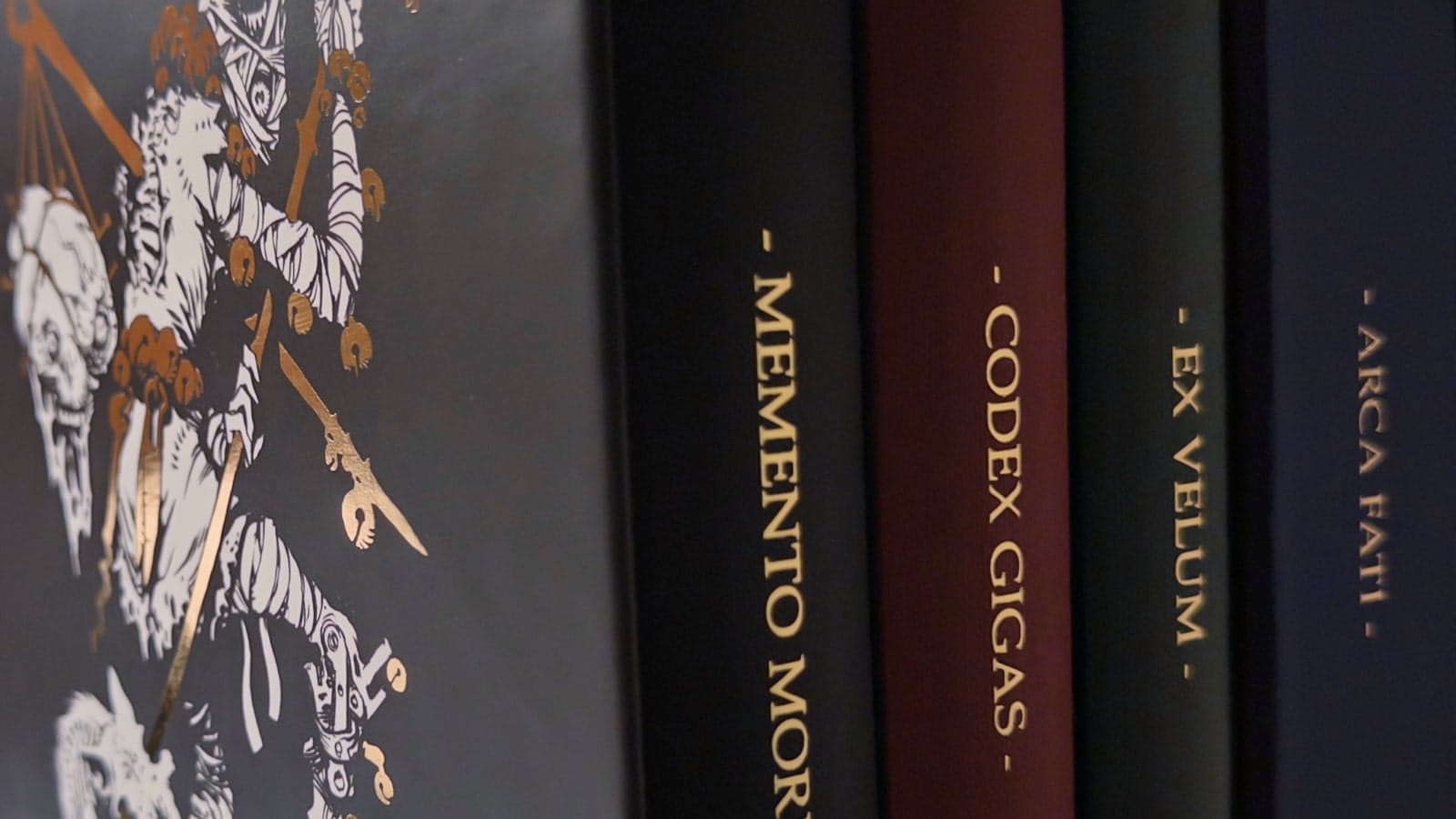
Matt and I fell in love with another Two Little Mice game, Memento Mori, which is about accomplishing one last task before succumbing to the Black Death. The slipcase set is a true work of art, but in a fashion completely different from Outgunned or Household. The form factor of the books, the embossed covers, the potent pen and ink interior art all help shape a reader’s understanding of the game world and what the game is designed to compel in us.
Right next to the Two Little Mice booth, the good people of Acheron Games showed off Brancalonia and Lex Arcana. In an alternate universe in which I play D&D, I’d be running a sprawling campaign set in Brancalonia. Acheron has produced a ton of books detailing this “mirrored” Medieval Italy, and they’re all gorgeous and evocative. Alternate D&D settings are a dime a dozen, and they usually feel like they’re primarily trying to be D&D but without elves, or with more grit, or with bigger axes and more chainmail bikinis. Brancalonia looks like it’s a confidently-assembled pastiche very deliberately designed to evoke a vivid “Spaghetti Western” fantasy world with its own tongue in cheek tone.
I’ve been collecting Lex Arcana books for some time, mostly because their worldbuiding goes so deep. This isn’t surprising, because these are Italians producing a game set in an alternate Roman empire, and an actual Roman history professor has been deeply involved in the game’s creation. It’s about servants of the emperor roaming the empire and confronting magical threats. That central conceit is genius, because it gives the PCs a reason to be adventuring, it provides structure the GM can use to introduce new adventures, and it still gives the players a lot of latitude.
For Gen Con I signed up to play Lex Arcana, because the one time I’d run it a few years ago, I struggled a bit with the starter adventure. Thankfully although the session wasn’t my favorite from the convention, it made me want to give Lex Arcana another shot. Less thankfully for my pocketbook, the good people of Acheron Games sold me the three newest Lex Arcana books. I had deliberately not joined the crowdfunder for these books because I wanted to avoid buying more material for a game I’d probably never play again.
But after playing a session I could see myself running it again. And the Acheron folks were so nice. You see how I justified the hefty purchase? Oh, and they threw in a free GM screen. I mean, at that point there was no resisting the urge to buy.
While the Italians are busy carving out their niche, Free League continues to demonstrate an operational excellence I’ve never seen in a tabletop RPG company of their size.
Creating products is hard. Creating a bunch of them at once on an ongoing basis is even harder. Pricing, gauging demand, paying contractors, managing licensing arrangements, distribution — it’s all hard. Just look at the history of Chaosium, not to mention all the game companies that are no longer with us because they couldn’t dial in their operations.
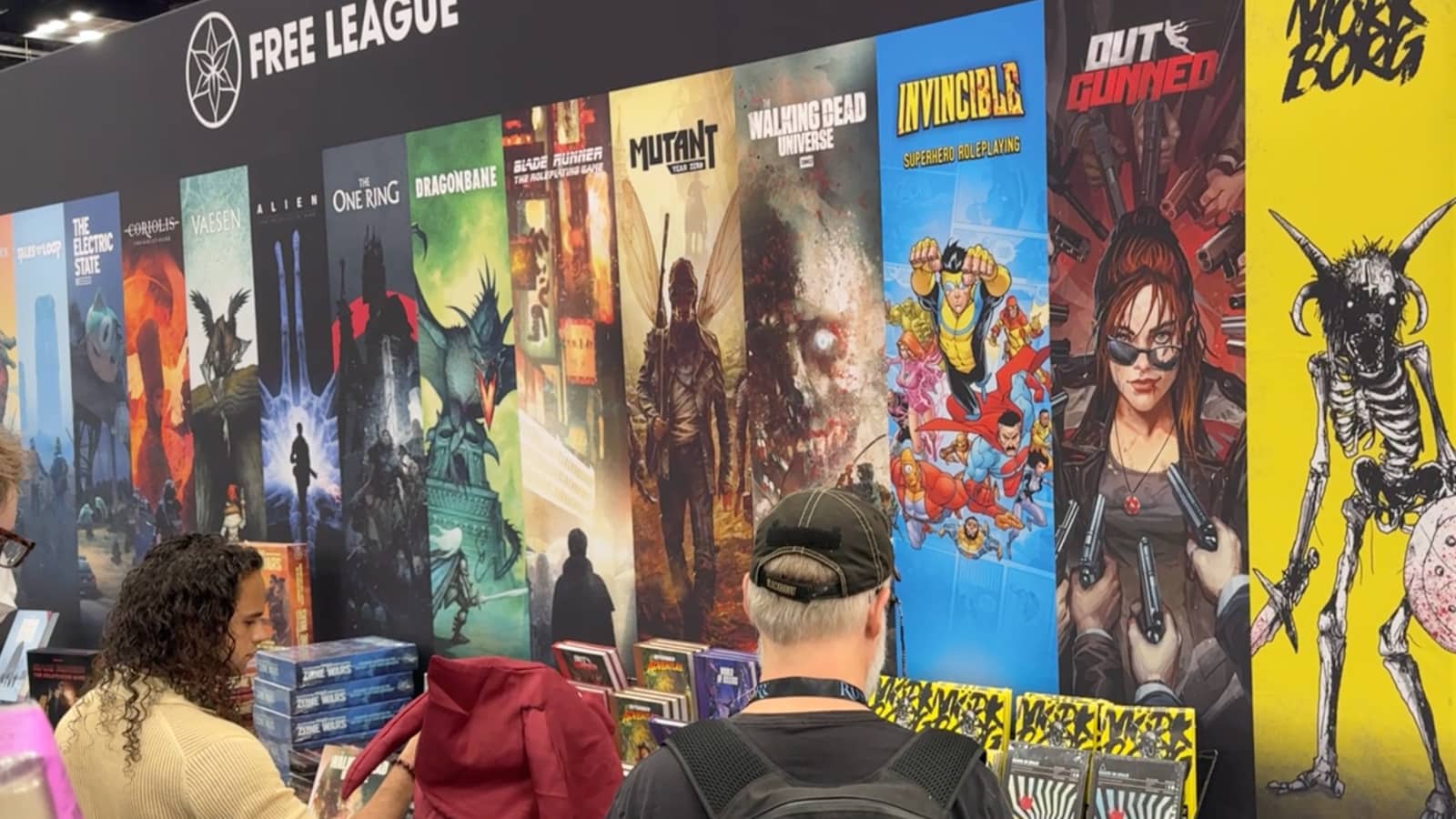
Over the years Free League has delivered some products late. But they’ve done an amazing job of producing Setting First games that evoke the spirit of the worlds they inhabit, and they play well. This applies to licensed and owned properties alike. It includes firsts like Blade Runner as well as new editions for worlds that have been explored by other games before them, like The One Ring.
Seeing them operate their impressive booth, watching them talk about their plans for the next several months, and playing in games they contracted Lurking Fears to run was like seeing Shohei Ohtani pitch a two-hitter while cranking out three home runs. It’s inspiring. They’re loose, they’re confident, and they still run a tight ship.
Designers
I explained to my wife, who is not a gamer, that meeting game designers face to face at Gen Con is like being able to talk to your favorite movie director or author. When a creative work touches you in some way, the opportunity to connect with the people who created it can really mean a lot.
This unexpectedly hit me when my friend Matt and I attended the Burning Wheel HQ seminar. It was billed as an update on what Luke Crane and Thor Olavsrud were up to, and I expected it would be a crowded room. But no, it was just Luke, Thor, and eight or ten attendees.
It turned out to be my favorite seminar. Luke explained what drove him to create their newest game, Special Patrol Group: Interceptor, which is a card-based RPG designed to evoke the feel of pre-apocalypse road movies like Mad Max. He ran through the initial seed idea, how he started bringing together the people who could help him bring the game to fruition, and how over time the idea became this fully-realized game.
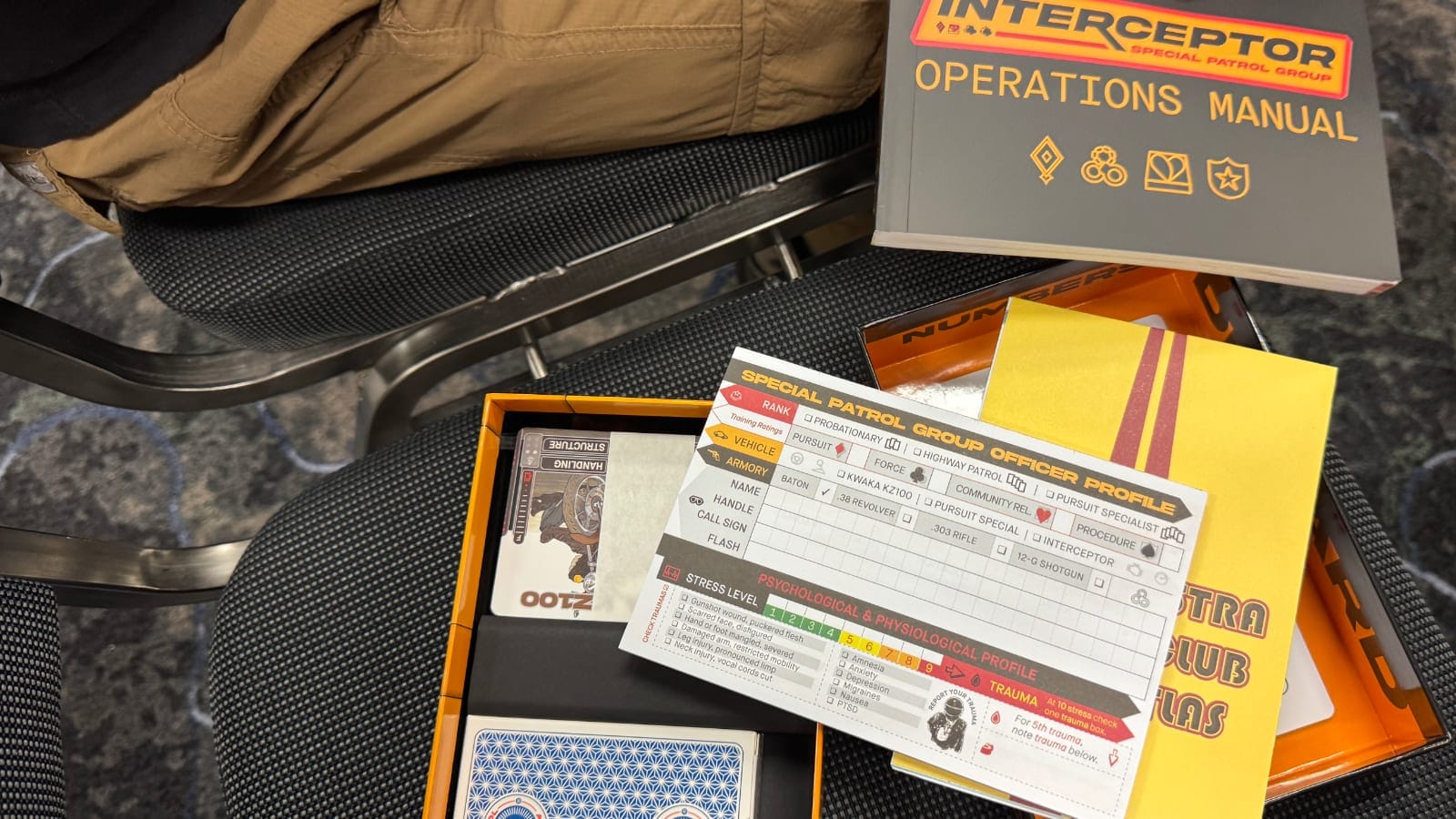
Thor talked about the new Middarmark 2e supplement for Torchbearer, which I’d already pre-ordered. It’s due to arrive at my door in a month or two, but they had copies with them for sale. I’ve never run Torchbearer, but I have all the 2e materials, and this Middarmark book really does look like the catalyst that will get me to run the game some time.
Just being able to hang out with Luke and Thor in that small group setting, and to have them describe what they’d been working on was inspiring.
I got a similar feeling talking at their booth with the Two Little Mice crew about their background in film, and what caused them to create their first games. Simone Formicola explained their approach to creating multiple sub-genres, and their “no blood onscreen” approach to Outgunned, There’s something special about having the thinking behind a game illuminated by one of its creators. It provides a deeper level of appreciation for how deeply the best designers think about the experience they want their games to bring to the table.
Introverts, Unite (Sort Of)!
I’ll leave you with one last observation. There were tens of thousands of people at Gen Con, but I was struck by how different the social experience was, relative to other similarly-sized events I’ve attended. Go to a baseball game, for example, and you’ll likely wind up chatting with other fans in the seats near you, or talking about the game with other people in the beer line.
Gen Con really did seem to me like the largest gathering of introverts in America, which is something of an oxymoron. It was quite obvious by the end of the convention that most of the people there were pretty wiped out, not just by playing game after game after game, but by the constant social interaction and the seething, swarming mass of people everywhere.
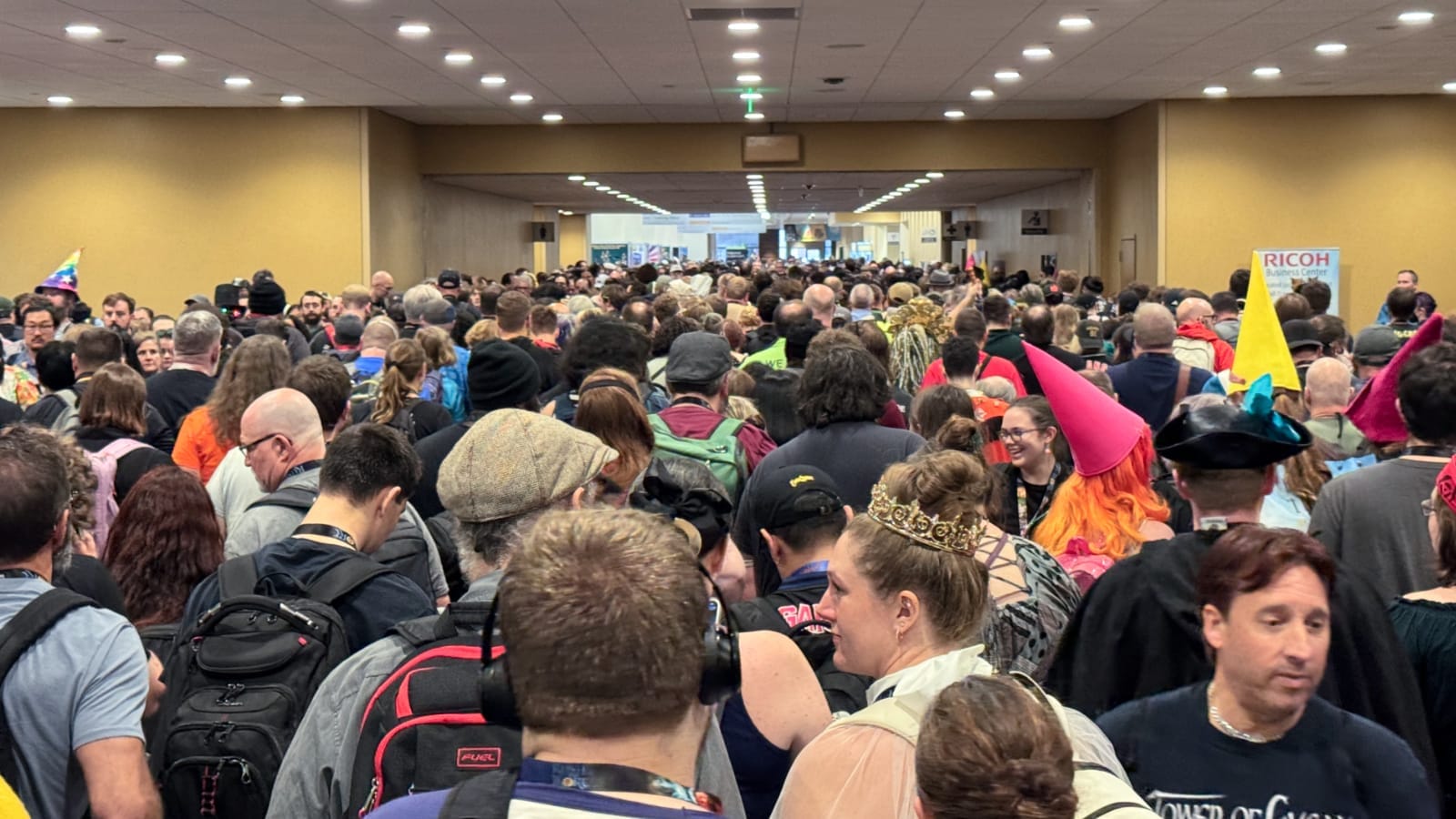
I also noticed that while at some game tables players introduced themselves, at others nobody even knew each other’s names, which didn’t seem to bother anyone. On a few occasions I struck up random conversation with other convention-goers, but the discussion generally fizzled out pretty quickly.
I’d categorize myself as an introvert, in that I get restorative energy from being alone rather than in a crowd. But I also came away from Gen Con feeling that the best connections I made were with the game designers. They weren’t there to play games, they were there to talk to people about what they were creating, to share their enthusiasm.
Gen Con was a lot of fun, and I might go again. But I realize after the experience that smaller conventions are much more my speed. They tend to be about connecting with people as much as they are about playing games, and ultimately that frame is more interesting and sustainable for me.
Ω